The Roadmap Worked. The Organization Didn’t Follow It.
There is a particular kind of program failure that catches leaders off guard. The roadmap was sound. The milestones were sequenced correctly. The operating model defined who owned what and how decisions got made. And then the program stalled, not because the plan was wrong, but because the people who needed to execute the change weren’t brought along. They didn’t understand what was changing or what was expected of them. They hadn’t been given the skills or tools to work differently. The plan described what the organization was building. Nobody described what the organization needed to become. This is the gap a Change Plan closes.
What a Change Plan Actually Is
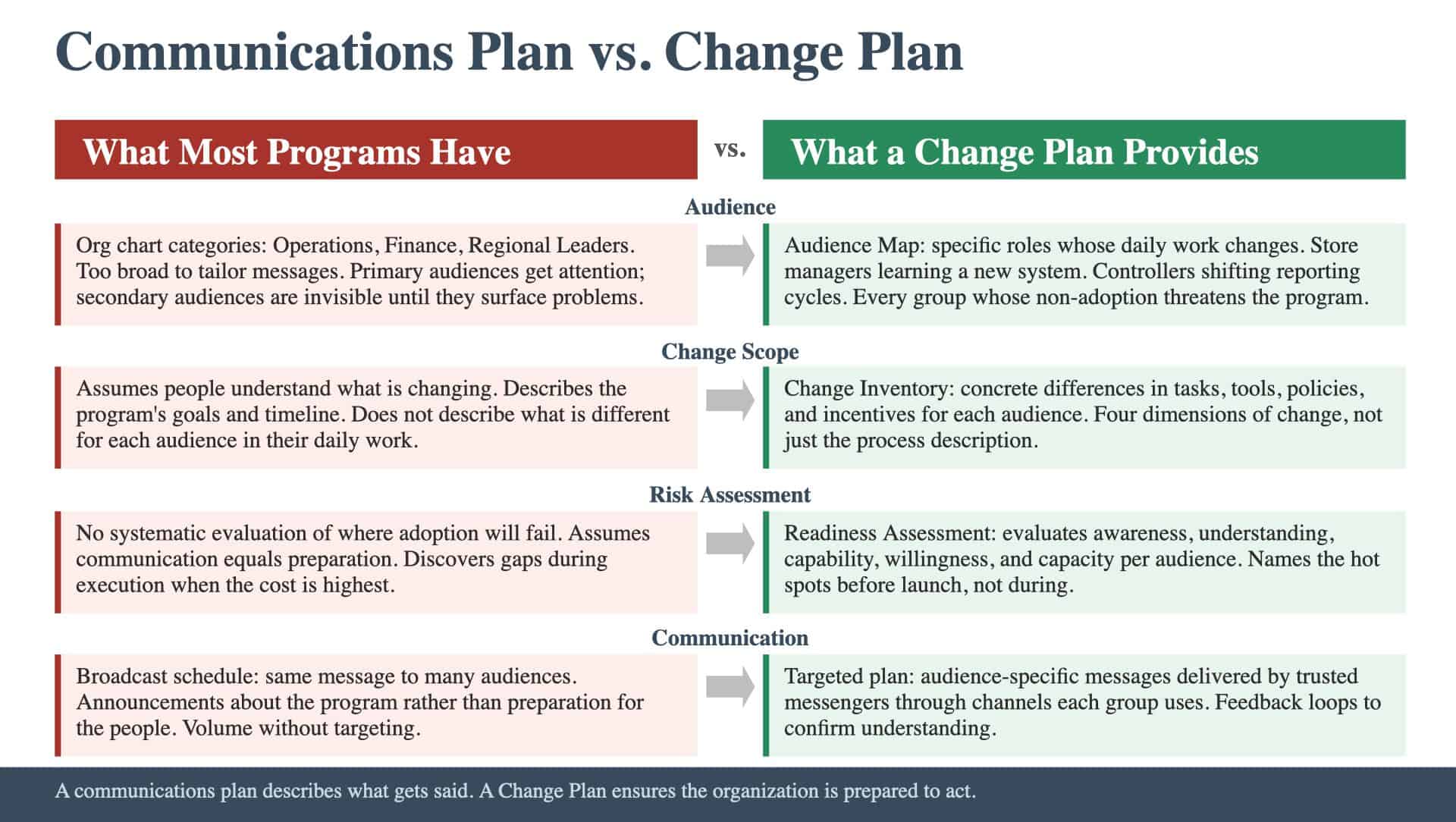
A Change Plan is a structured artifact that forces systematic thinking about adoption. It answers four questions that determine whether the people affected by the program will actually change their behavior:
- Who are the audiences? Not functions on an org chart, but specific roles whose daily work will be different.
- What changes for each audience? The concrete differences in tasks, tools, policies, and incentives.
- Where is adoption at risk? The honest assessment of readiness, including the hot spots where resistance or capability gaps threaten success.
- How will the organization communicate? The plan for reaching each audience with the right messages, delivered by the right messengers, through the right channels.
The roadmap describes what the team is building. The operating model describes how the team will run it. The Change Plan describes how the team will bring the organization along. These are not the same problem. A program can have an elegant roadmap and a robust operating model and still fail because the people who need to execute the change weren’t prepared for it.
Why Leaders Underestimate This
The instinct is to assume that communication equals adoption. Leaders announce the change, send the email, hold the town hall, post the update on the intranet, and assume the organization now understands what’s happening. This is the broadcast trap: treating communication as a one-way push and assuming that sending a message means the message was received. But awareness is not preparation. Telling people about a change is different from preparing them for it. People need skills to do the new work and tools that support the new process. They need policies that align with the new expectations and incentives that reward the new behavior. Information alone doesn’t produce any of that. The second instinct is to focus change management energy on executives. Leadership alignment matters, but frontline adoption determines success. The store manager learning a new inventory system, the regional director adjusting to a new reporting cadence: these are the people whose behavior change determines whether the program delivers its intended outcomes.
What Happens Without One
Without a Change Plan, programs discover adoption gaps during execution, when the cost of addressing them is highest and the timeline is least forgiving. The pattern is consistent. The team launches a new process and discovers that the people responsible for running it don’t understand how it works. The team rolls out a new tool and discovers nobody was trained on it, or implements a new policy only to find the incentive structure still rewards the old behavior. Each of these gaps could have been identified and addressed before launch. Instead, the team spends execution cycles doing remediation work that should have been planning work. The more damaging failure is subtler. Without systematic audience mapping, programs miss entire groups of people who are affected by the change. The obvious audiences get attention. The less obvious ones, the teams two levels removed whose workflows change because of upstream decisions, discover the impact when it arrives. By then, resistance has already formed.
The Difference Between a Change Plan and a Communications Plan
A communications plan describes what gets said, to whom, and when. A Change Plan is broader. It starts with the audience map and change inventory, understanding who is affected and what specifically changes for them, before it gets to communication. Communication is one component of a Change Plan, not the whole thing. The distinction matters because communication without change analysis is guesswork. If the team hasn’t mapped the specific changes each audience faces, the communication plan has nothing substantive to communicate. The messages become generic announcements rather than targeted preparation. A Change Plan also includes readiness assessment: the honest evaluation of where adoption is at risk. Some audiences will embrace the change because it solves a problem they already recognize. Others will resist because the change threatens their autonomy or their expertise. Understanding the difference lets the team target its investment where it matters most.
Why the Messenger Matters as Much as the Message
One of the least intuitive aspects of change management is the role of the messenger. People don’t evaluate messages on their content alone. They evaluate them based on who delivers them. The right message from the wrong person falls flat. The same information delivered by a trusted peer lands differently than when it comes from a corporate communications department. This is why a Change Plan specifies messengers, not just messages. For each audience, the plan identifies who has credibility with that group and who should deliver the key communications. This isn’t a detail. It’s the difference between communication that drives adoption and communication that gets ignored.
Where This Fits in the Larger Method
The Change Plan is the seventh of nine artifacts in the planning and roadmapping method. It sits between the Operating Model, which defines how the program runs, and the Rollout Plan, which defines how the program launches. The sequence is intentional. The team needs to know what they’re building (the Integrated Roadmap) and how they’ll run it (the Operating Model) before they can plan how to bring the organization along. Change management planning without a clear picture of what’s changing is premature. Change management planning after rollout has started is too late. The risk assessment done earlier in the method often identifies adoption risks that feed directly into the Change Plan. The Impact Assessment quantifies what’s at stake for each audience, while the Resistance Analysis identifies where behavioral barriers will concentrate. The stakeholder mapping from Step 2 provides the foundation for audience identification. The question is whether the team plans for adoption before execution starts: or whether they discover the gap when the organization fails to follow a roadmap it was never prepared for.
Keep Reading
Ready to close specific gaps in your Change Plan? These articles show you how: