The Pattern Is Always the Same
The program had a solid roadmap. The milestones were sequenced. The operating model defined roles, cadences, and decision rights. Leadership was aligned. And then the team launched the first wave and discovered that the people responsible for executing the change weren’t ready for it. This is not an edge case. It is the default outcome when programs treat change management as a communications exercise rather than a planning discipline. The failure doesn’t announce itself as a change management failure. It shows up as missed adoption targets, as resistance that “came out of nowhere,” as timelines that slip because retraining was never in the schedule. Here are the patterns that repeat when programs skip systematic change planning.
The Tool Rollout Nobody Was Trained On
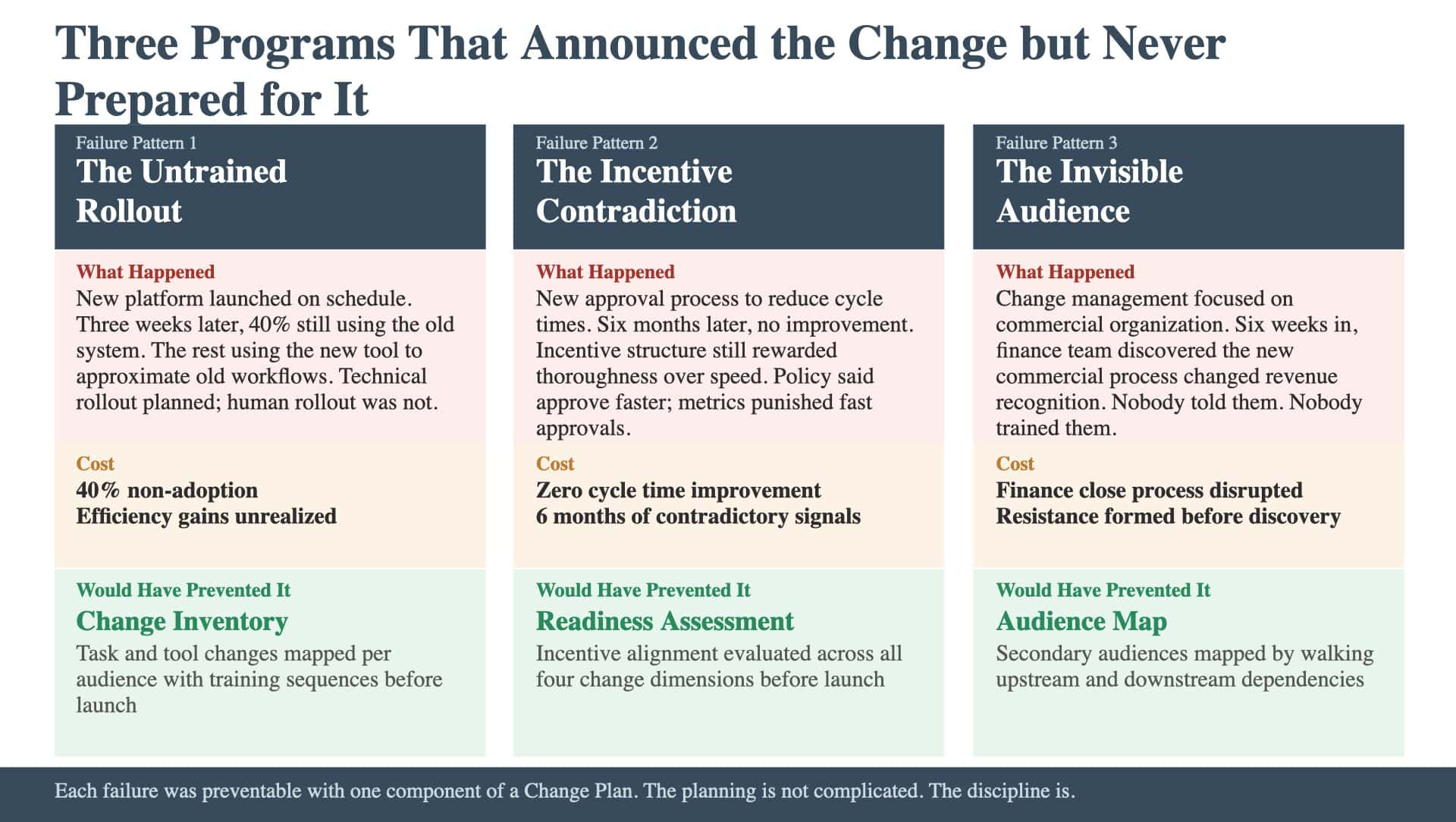
The program team selects a new platform, configures it, tests it, and launches it on schedule. The rollout is a technical success. The adoption numbers tell a different story. Three weeks after launch, usage data shows that 40 percent of the target audience is still using the old system. The remaining 60 percent is using the new system, but only a fraction of its capabilities. People found workarounds that let them approximate their old workflow inside the new tool. The efficiency gains the program was supposed to deliver don’t materialize because the tool is being used as a replica of what it replaced. The root cause isn’t resistance to change. It’s the gap between deploying a tool and preparing people to use it. The program planned the technical rollout: servers, configurations, data migration, testing. Nobody planned the human rollout: what skills people needed, what their daily workflow would look like, how their tasks would change, and what support they’d need during the transition. The Training Plan exists precisely to close this gap, mapping capability needs to delivery sequences before launch day arrives. A Change Plan would have surfaced this gap before launch. The change inventory would have mapped the specific task and tool changes for each audience. The readiness assessment would have identified capability gaps. The communication plan would have included training sequences, not just announcements.
The Policy Change That Contradicted the Incentive Structure
The program implements a new approval process designed to reduce cycle times. The policy is clear: approvals now follow a streamlined path with fewer signatures and faster turnaround requirements. Six months later, cycle times haven’t improved. The investigation reveals that the incentive structure still rewards thoroughness over speed. Managers are evaluated on risk avoidance, not on approval velocity. The new policy asks them to approve faster, but their performance metrics punish them for approving too quickly. Faced with a policy that says one thing and incentives that reward another, people follow the incentives. This is what happens when change planning addresses tasks and policies but ignores incentive alignment. The change inventory in a proper Change Plan captures all four dimensions: tasks, tools, policies, and incentives. Missing any dimension creates a contradiction that people resolve by defaulting to whatever the incentive structure rewards.
The Audience Nobody Thought About
The program targets the commercial organization: sales teams, account managers, customer success. The change management effort focuses entirely on these groups. Training is designed for them. Communication reaches them. Readiness is assessed for them. Six weeks into execution, the finance team identifies a problem. The new commercial process changes how revenue is recognized, which changes how the finance team closes the books each quarter. Nobody told them. Nobody trained them. Nobody mapped how the upstream changes in commercial operations would cascade into their workflows. The program didn’t deliberately exclude finance. The team simply didn’t build an audience map that went beyond the obvious target population. The consulting team identified the primary audiences, the people whose job descriptions mention the affected processes, and missed the secondary audiences, the people whose work changes because of upstream or downstream dependencies. Systematic audience mapping prevents this. The discipline of walking through every group whose behavior changes, not just the groups whose behavior is targeted, identifies the secondary audiences before their adoption gaps become execution problems.
The Resistance That “Came Out of Nowhere”
Leadership is aligned. The executive sponsor is vocal and supportive. The program has strong governance. And then during the second wave of rollout, a regional leadership team pushes back. They don’t refuse outright. They raise concerns about timing and competing priorities. The rollout slows. Momentum stalls. The program team is caught off guard. Leadership is aligned, so where is this resistance coming from? It’s coming from the gap between executive alignment and frontline readiness. The executives agreed to the program. The regional leaders who report to them are dealing with the operational reality of implementing it alongside three other initiatives, a budget cycle, and a reorganization. Their resistance isn’t about the change itself. It’s about change saturation: the cumulative burden of too many changes competing for the same people’s attention. A readiness assessment would have flagged this. Part of assessing readiness is understanding the broader change landscape for each audience. What else is hitting them? How much capacity do they have? If the answer is “very little,” the team can adjust timing or make the case for deprioritizing competing initiatives. Without that assessment, the team discovers saturation when resistance emerges, and resistance that identifies during execution is far more expensive to address than resistance identified during planning.
The Communication That Generated Noise Instead of Understanding
The program sends weekly updates. The executive sponsor records video messages. The intranet features a dedicated program page. The team produces a newsletter. By any measure, communication is robust. But when the team surveys affected audiences, the results are discouraging. People know the program exists. They can name it. They cannot describe what it means for their specific role. They cannot articulate what will change in their daily work. They cannot identify when the changes will affect them or what they need to do to prepare. The communication effort produced awareness without understanding. The messages described the program’s goals and timeline. They didn’t describe what was changing for each specific audience. They were broadcast communications, one message to many audiences, rather than targeted communications tailored to what each group needed to know. This is the broadcast trap in action. Volume of communication is not the same as quality of communication. A Change Plan that specifies messages by audience, tied to the specific changes each group faces, produces understanding. A communications calendar that sends generic updates produces noise.
The Common Thread
Every one of these failures could have been prevented with the work that a Change Plan forces: mapping audiences, inventorying changes, assessing readiness, and designing communication that’s targeted rather than generic. The Impact Assessment quantifies what’s at stake for each audience, making the cost of inaction concrete before execution begins. The discipline of doing this before execution starts is what most programs lack. The question is whether the team invests in systematic adoption planning before launch: or whether it discovers the gaps during execution, when the cost is highest and the credibility is hardest to rebuild.
Keep Reading
Ready to close specific gaps in your Change Plan? These articles show you how: